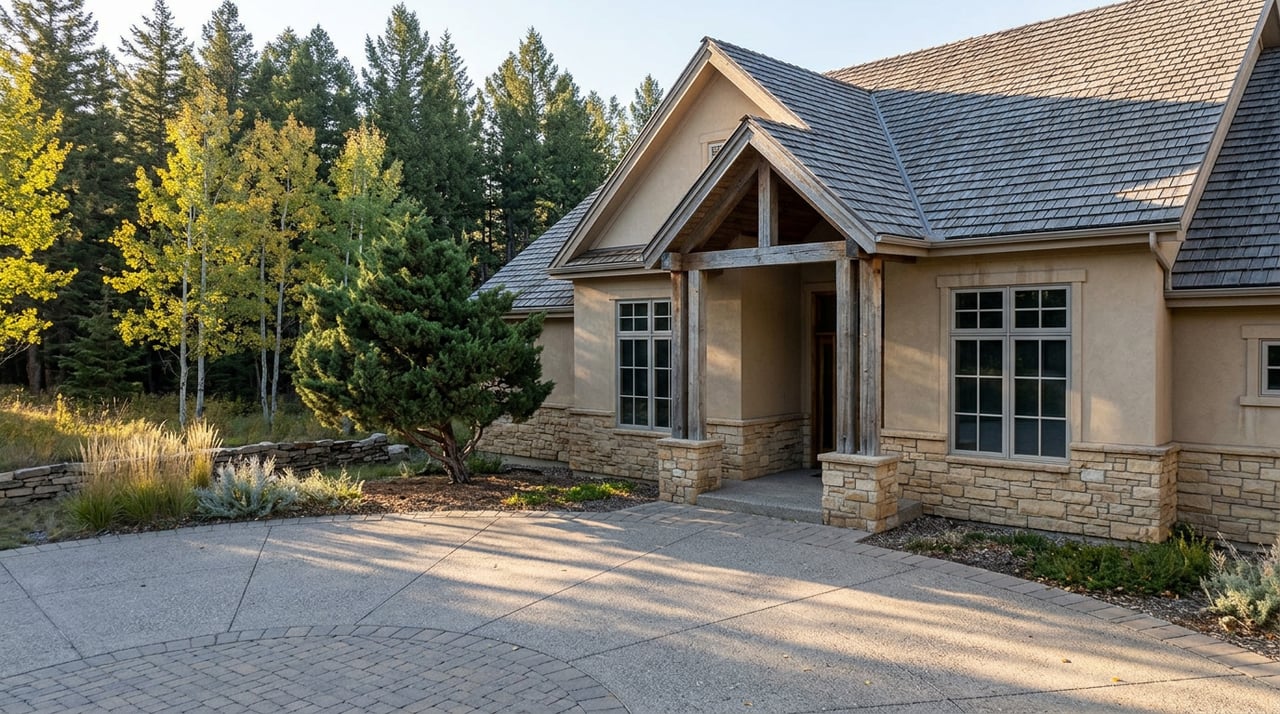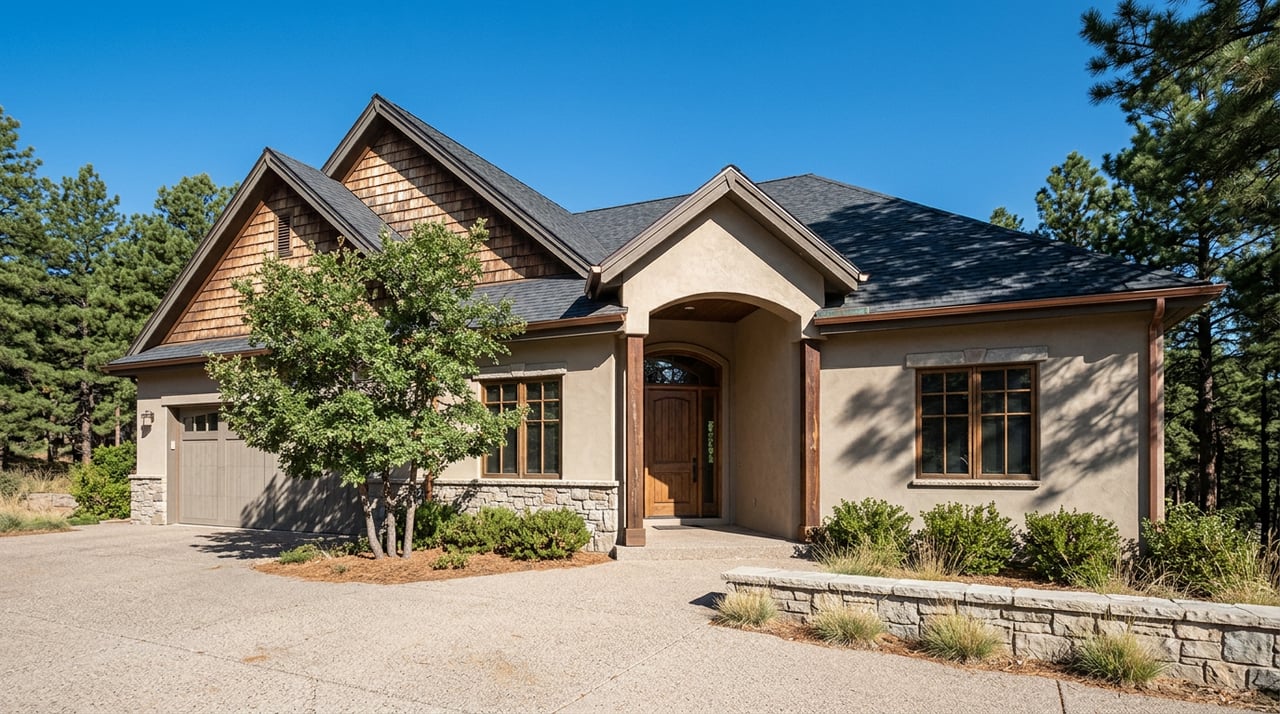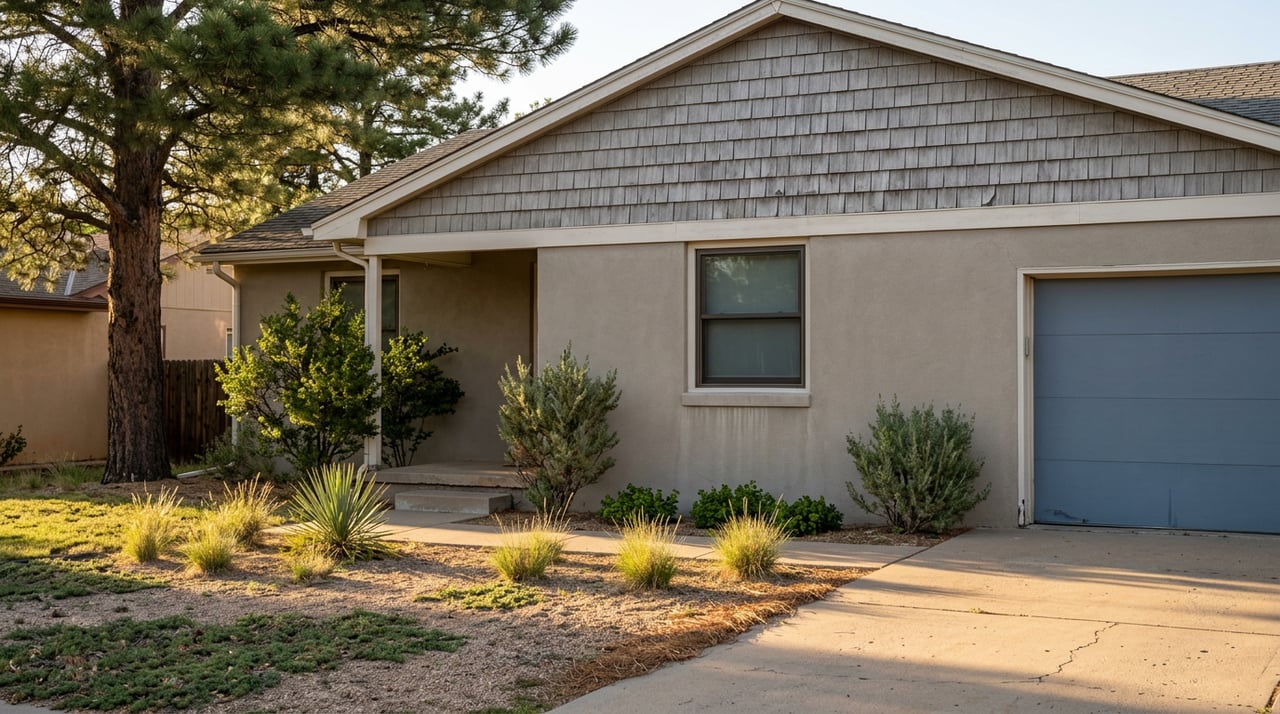
Two homes in Monument, both listed near $650,000, both inside the same school district, both a short drive from the same Safeway. Compare the tax lines on their closing statements and you could be looking at a difference of thousands of dollars a year. Nothing in the MLS remarks tells you why. The listing price is the same. The property tax isn't.
The reason has nothing to do with square footage or lot size. It comes down to which special taxing district the home sits inside, and how far along that district is in paying off the debt it took on to build the roads, water lines, and parks around it. That's the piece buyers routinely miss when they compare two Monument neighborhoods on price alone, and it's worth understanding before you fall for a house.
The math behind the mill levy
A metropolitan district's mill levy isn't a fixed price tag. It's a fraction: total debt payment divided by the number of homes currently on the hook to pay it. That single fact explains almost everything about why Monument's tax bills vary so much from one subdivision to the next.
Take Triview Metropolitan District, which covers a large share of the Jackson Creek area. Triview now serves more than 2,300 single-family homes along with roughly 790 multi-family units and 80 commercial customers, according to the district's own reporting. That's a wide base sharing a debt load that dates back to the district's formation in 1985. Spread the same bond payment across thousands of rooftops instead of a few dozen, and the annual bite per household shrinks.
Now look at a much newer district built to serve a single, much smaller subdivision. When El Paso County commissioners approved the Cloverleaf Metropolitan District, it was created to finance $8 million in infrastructure debt for a neighborhood of just 144 single-family homes near the intersection of Higby Road and Jackson Creek Parkway, on land that had once been slated for a golf course. Divide $8 million among 144 houses instead of 2,300, and you get a very different number. That's the mechanism. It isn't that Cloverleaf is a worse deal by design. It's that a brand new district always starts with the fewest possible homes covering the most possible debt.
Triview: a district paying itself down
Triview's own numbers show what happens on the other side of that curve. According to the district's February 2026 newsletter, the total mill levy has fallen from 35 mills in 2019 to 20.5 mills today, a reduction of more than 40 percent over six years. The current levy breaks into three pieces: 13.5 mills for historical debt dating back to the district's founding, 4.5 mills tied to the Higby Road bonds, and 2.5 mills for operations and maintenance of streets, parks, and open space, according to the district's funding and debt service page.
That Higby Road piece is worth sitting with, because it shows the tradeoff in action rather than in theory. In May 2025, Triview residents voted 344 to 230 to approve $12.6 million in general obligation bonds to fund a widening of Higby Road, adding two roundabouts, new sidewalks, a multi-use trail, and drainage improvements near Lewis-Palmer High School, according to the district's Higby Road project page. The district's board committed to holding the total mill levy at 20.5 mills rather than raising it to cover the new debt, funding the annual bond payment instead through existing sales tax revenue, the operations and maintenance levy, and developer contributions. As of a KRDO report published this month, construction on the roundabout and road upgrades is now scheduled for completion in October, ahead of the November 2026 target the district had been quoting as recently as this February.
That's the story a mature district tells: debt taken on decades ago, now shared across a large and still-growing tax base, with new projects layered in without moving the needle on what any individual homeowner owes.
Cloverleaf: a district still finding its real number
Cloverleaf tells the opposite story, and it's a useful reminder that a developer's original tax pitch is a projection, not a promise. When the district was approved, El Paso County planner Kari Parsons told commissioners that homeowners could expect to pay around 65 mills, pushing the annual tax bill on a $650,000 home to roughly $6,300, a 91 percent jump from the undeveloped land's prior tax rate of about $3,300. According to the district's 2026 special district transparency filing, the actual certified mill levy for collection this year is 67.117 mills, already running higher than the number used to sell the neighborhood in the first place.
None of this means Cloverleaf residents are being treated unfairly. It means a brand new district, still building out its full base of homes and still working through its early debt service, can land above its own initial pitch once the real numbers come in. That's a pattern worth remembering anywhere in Colorado you're looking at a subdivision less than five years old.
Woodmoor: no district bill at all
Then there's Woodmoor, the oldest section of Monument, where development began in 1971 across roughly 2,000 wooded acres of ponderosa pine. Woodmoor never formed a metro district. Community upkeep runs through the Woodmoor Improvement Association, a voluntary structure that collects dues rather than levying property tax, while utilities come through the separate Woodmoor Water and Sanitation District. A Woodmoor buyer isn't weighing a maturing debt schedule against a new one. There simply isn't a metro district line on the tax bill to begin with.
Here's how the three compare side by side:
| Structure | Status in 2026 | Mill levy | What it's paying for |
|---|---|---|---|
| Triview Metropolitan District | Mature, debt shrinking | 20.5 mills, down from 35 in 2019 | Historical infrastructure debt, Higby Road bonds, road and park upkeep across 2,300+ homes |
| Cloverleaf Metropolitan District | New, still building out | 67.117 mills certified for 2026, above the original 65-mill pitch | Roads, water and sewer for a subdivision of 144 homes |
| Woodmoor | No metro district | None | Voluntary association dues instead of a tax-based levy |
It's worth remembering none of these homeowners are tax free. Every property in Monument also carries the shared baseline levies from the Town of Monument, El Paso County, and Lewis-Palmer School District 38, which in 2024 stood at 2.0 mills, 23.459 mills, and 49.5 mills respectively, according to county records. The El Paso County Treasurer publishes the current year's full mill levy table for anyone who wants to check the latest figures directly. Those layers apply regardless of which subdivision you buy in. The metro district mill levy is the piece that varies, and it's the piece that explains most of the spread between two homes priced the same.
Before you compare two listings
Colorado law already requires that a seller inside a metro district formed on or after January 1, 2000 hand the buyer the district's official website, a rule the state's Division of Local Government has published plain-language guidance on. In practice, that means every district discussed here, Triview and Cloverleaf both, has a public site with budget documents, board minutes, and the current certified mill levy sitting in plain sight. Pull that up before you write an offer, not during your inspection window. If a service plan caps how high a district's debt mill levy can legally climb, that cap is worth reading in full rather than taking secondhand.
The practical move is simple. Ask which district a home sits in, how many homes currently share its debt, and whether that number is still growing or has leveled off. A five-year-old subdivision with 40 percent of its planned homes built has a very different trajectory than a district that hit full build-out a decade ago. The list price won't tell you that. The district's own board documents will.
A few questions worth asking directly
Is a metro district the same as an HOA? No. An HOA is a private association that collects dues and enforces covenants. A metro district is a quasi-governmental entity with the power to levy property tax and issue bonds, and in some Colorado neighborhoods you'll find both layered on the same home.
Can a mill levy go up after I buy? It can, within whatever cap the district's original service plan allows. That's exactly why reading the service plan during due diligence matters more than trusting the number on a current tax bill.
Where do I find a district's current mill levy? Start with the district's own official website, which state law requires the seller to provide, and cross check it against the El Paso County Treasurer's published mill levy tables for the current year.
If you're comparing homes across Monument's neighborhoods and want someone who reads service plans before showing days rather than after, Benjamin Kennedy at Broadmoor Homes Co can walk you through what each district actually means for your bottom line. Let's Connect.