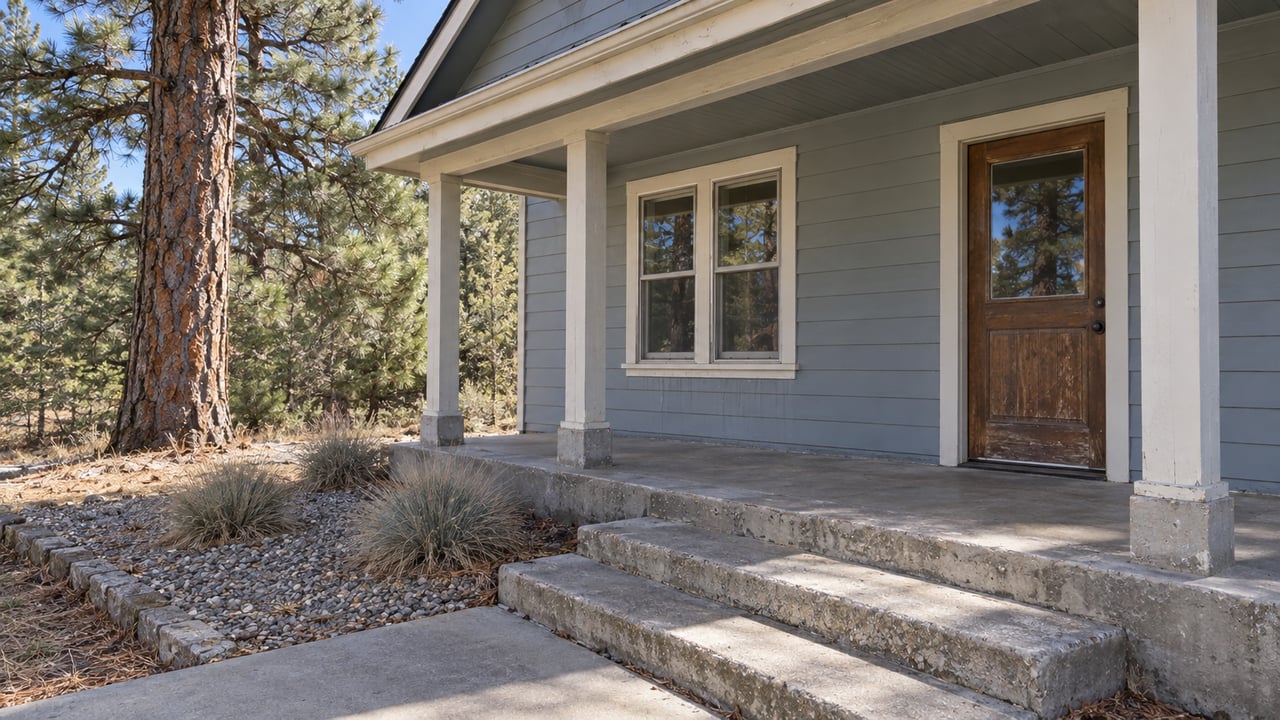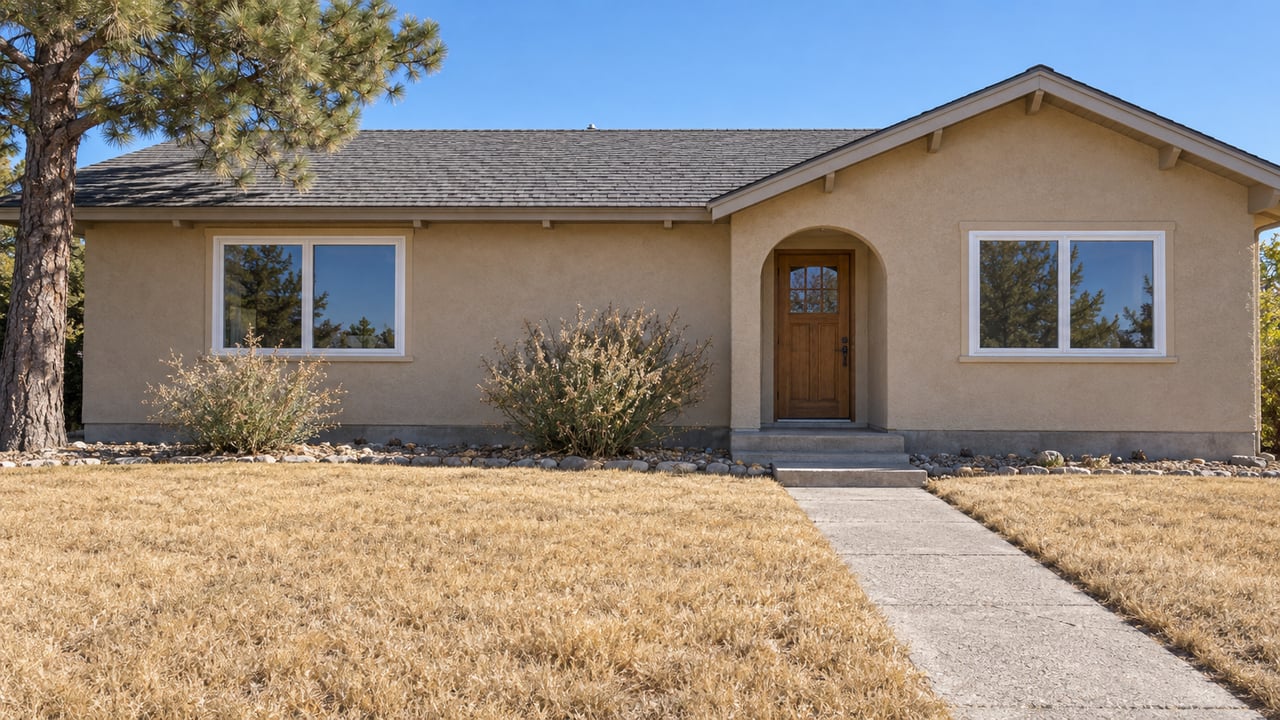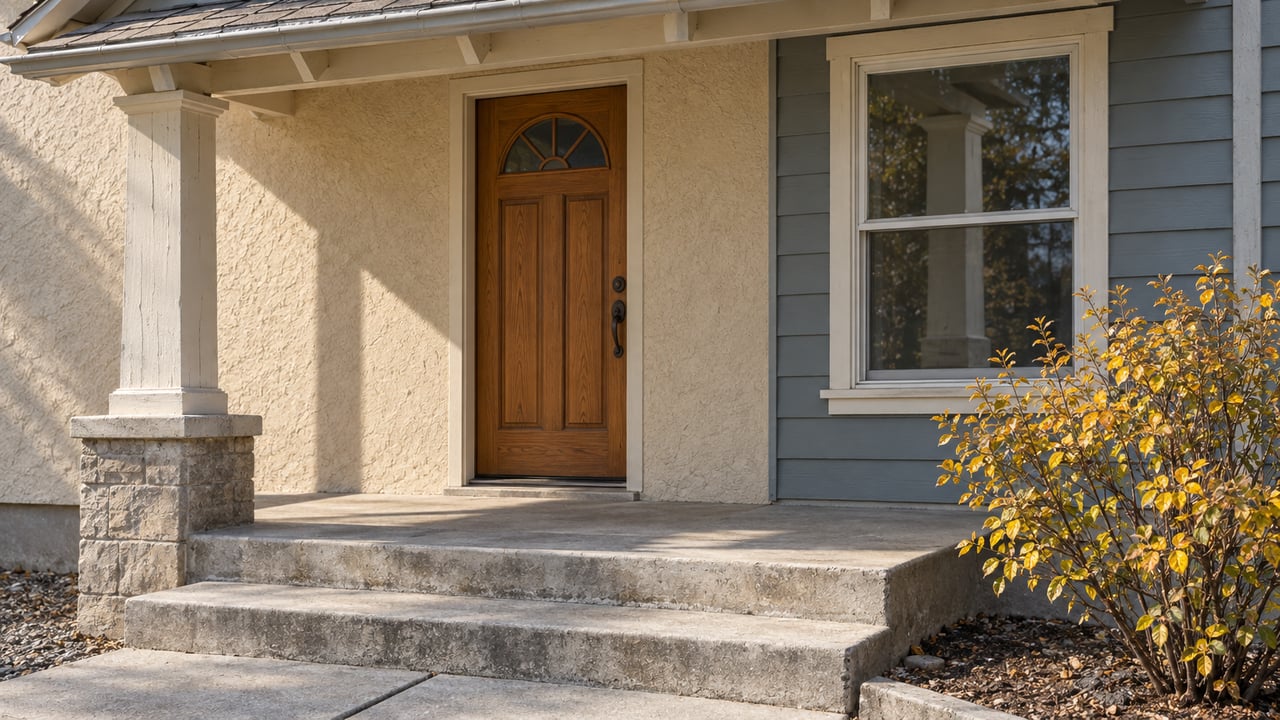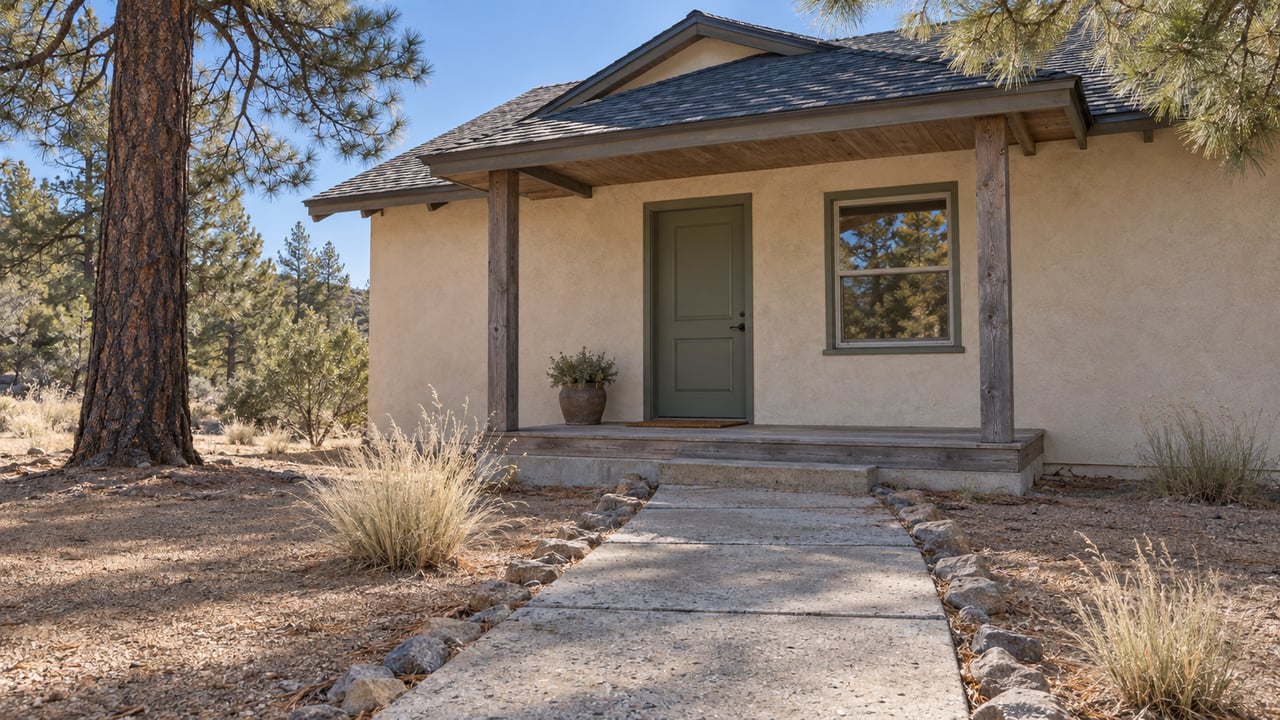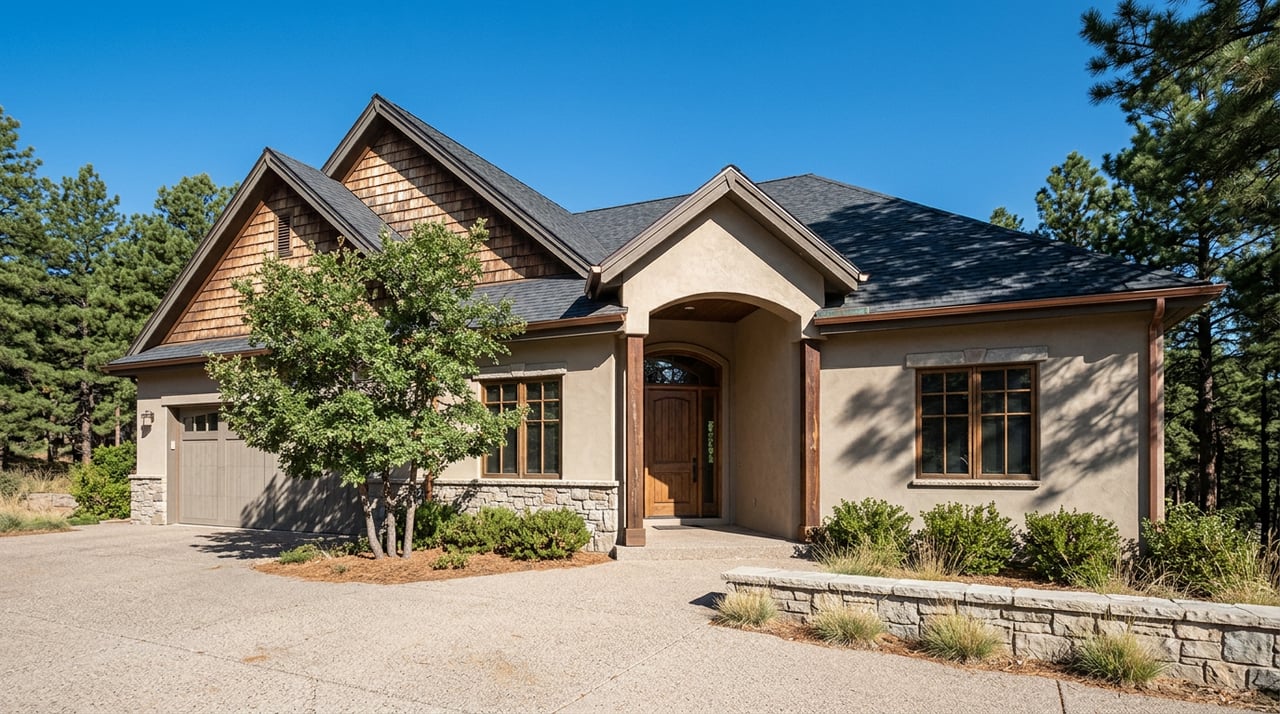
Two houses go on the market a half mile apart. Both listings say "The Broadmoor." Both buyers picture the same golf-course prestige, the same five-star hotel down the road, the same rules.
That is not a hypothetical. It is what is actually happening on the ground in the Broadmoor area of Colorado Springs right now, and it is the single most consequential thing a buyer or renovator can misunderstand about this part of town. "The Broadmoor" is a marketing name for a cluster of distinct legal territories, each with its own governance, its own architectural review process or lack of one, and its own answer to the question that matters most before you write an offer: who actually decides what you can do with this house.
Where the rules diverge
Ask a builder who works this market and they will tell you the first thing they confirm on any Broadmoor project is not the lot line. It is which sub-neighborhood the parcel sits in, because that answer determines the entire regulatory path.
According to Giudice Builds, Broadmoor Resort Community is a gated 573-acre community with its own homeowners association, mandatory architectural review, 24-hour security, and HOA fees that can run as high as $700 a month. Any exterior work here, from a re-roof to a full addition, goes through HOA review before a building permit is even issued. The eastern side of the community, closer to the Country Club of Colorado, is mostly townhomes and condos in the $300,000 to $630,000 range. The gated western side, with Mediterranean-style villas and Front Range views, runs higher, generally $700,000 to $1.3 million depending on size. Trailing twelve-month sales data has put the community's median sale price around $675,000, with homes typically taking longer to sell than the national average, a pace consistent with a smaller, tightly governed inventory rather than a fast-moving open market.
Broadmoor Hills is a covenant-protected neighborhood of 140 custom homes at the foothills in southwest Colorado Springs; according to Broadmoor Hills HOA, it is governed by a voluntary HOA with an Architectural Control Committee. The covenants trace back more than 40 years to a declaration written by the Gates Land Company, and they cover seven separate filing areas, including Broadmoor Valley Park and Oak Bridge Park.
Broadmoor Heights has no mandatory HOA across most of the neighborhood, which means owners here have more flexibility on exterior decisions than their neighbors two subdivisions over.
Broadmoor Bluffs is the most fractured of the four. It is not one subdivision at all but roughly 20 separate subdivisions, each with its own covenants and its own HOA arrangement. Some run active architectural review. Others have minimal oversight or none. The Bluffs HOA, one of those subdivisions, operates under four separate recorded covenant filings and charges dues of $25 a year, a figure that tells you almost nothing about what a different Bluffs subdivision a few streets away might require. The Spires HOA describes another pocket, filed as The Boulders Broadmoor Filing No. 1 and 1-A, as covering 366 lots under its own drainage-focused HOA structure entirely.
Four names. At least five distinct governance arrangements once you count how differently Broadmoor Bluffs behaves subdivision to subdivision. None of it shows up on a listing sheet.
Why the city won't save you
Buyers who have shopped the Old North End know that historic character there is enforced by the city itself, through a Historic Preservation Overlay Zone and Historic Preservation Board review. The Broadmoor area works differently. There is no city-imposed historic overlay here. The city treats a Broadmoor renovation the same way it treats any other Colorado Springs project: all building permits, regardless of sub-neighborhood, go through the Pikes Peak Regional Building Department.
That sounds like a simpler path, and in a real sense it is. But it also means the city is not your backstop.
The rulebook Broadmoor Hills just tried to rewrite
Nowhere is the stakes of this fragmentation clearer than a covenant fight that played out in Broadmoor Hills in 2024 and 2025. The neighborhood's covenants date back to a 1978 declaration written by the Gates Land Company, and the HOA board spent that window building support to modernize them. The reasons cited by the Broadmoor Hills HOA were specific: short-term rentals, accessory dwelling units, and a state law that lifted long-standing limits on how many unrelated people can occupy a single dwelling, all developments the original 1978 language never anticipated.
Updating those covenants was never a simple board vote. Colorado law required signatures from at least three-fourths of property owners in each affected subdivision, filed with the El Paso County Clerk and Recorder, starting with filings like Roxbury Park. If that threshold was not met, the 1978 covenants stay in force exactly as written, unaddressed modern issues and all.
For a buyer today, the lesson is not the specific outcome of that 2024-2025 vote. It is that a covenant you read on a title report can be mid-change, and the only way to know which version currently governs a Broadmoor Hills lot is to ask the HOA directly rather than assume the declaration on file is the final word.
Twenty rulebooks under one name
Broadmoor Bluffs deserves its own warning because the scale of fragmentation there is easy to underestimate. Roughly 20 separate subdivisions share the Broadmoor Bluffs name, and each was platted with its own declaration. Some, like The Bluffs, have an active volunteer board, an Architectural Control position, and multiple recorded covenant filings going back decades. Others carry covenants so minimal that a builder working the area routinely has to pull the recorded declaration just to confirm whether architectural review exists at all.
This is the part of the Broadmoor story a listing photo cannot tell you. Two homes on the same Bluffs street can answer the "can I build this" question completely differently, not because of zoning, but because of which 1970s-era filing happens to attach to that specific lot.
What to confirm before you write an offer
If you are buying, renovating, or planning a rental strategy anywhere in the Broadmoor area, treat this as your due diligence checklist, not a formality:
- Identify the exact sub-neighborhood and subdivision filing, not just "The Broadmoor." A title company or the El Paso County Clerk and Recorder's office can confirm which recorded declaration attaches to the parcel.
- Pull the actual covenant document, not a summary. Broadmoor Hills posts its declarations directly, and other associations will provide theirs on request. Read the architectural review section specifically.
- Ask whether the HOA is mandatory or voluntary.
- Confirm current HOA dues and any pending assessments. A $700 monthly fee in Broadmoor Resort Community changes the math on a purchase in a way a $25 annual fee in parts of the Bluffs never will.
- Ask specifically about ADUs and short-term rentals if either factors into your plans. Given the 2024-2025 covenant fight in Broadmoor Hills and the variance across Bluffs subdivisions, confirm the current version of the declaration rather than relying on an older copy.
- Confirm permit sequencing with Pikes Peak Regional Building Department.
A few questions worth asking directly
Does every home in the Broadmoor area belong to an HOA? No. Most of Broadmoor Heights has no mandatory HOA, while Broadmoor Resort Community has its own HOA and Broadmoor Hills has voluntary HOA membership.
How do I find out which rules apply to a specific address before I make an offer? Start with the recorded declaration at the El Paso County Clerk and Recorder, then confirm current HOA status and dues directly with that subdivision's association where one exists. This is exactly the kind of parcel-specific research worth doing before, not after, you're under contract.
If you are weighing a purchase, a renovation, or a rental strategy anywhere in the Broadmoor area, I would rather walk the specific parcel with you and pull the actual covenant than let you find out the hard way which of these rulebooks applies. Reach out to Broadmoor Homes Co and let's connect before you write the offer, not after.
This article is general information, not legal, tax or financial advice. Consult a qualified professional about your situation.