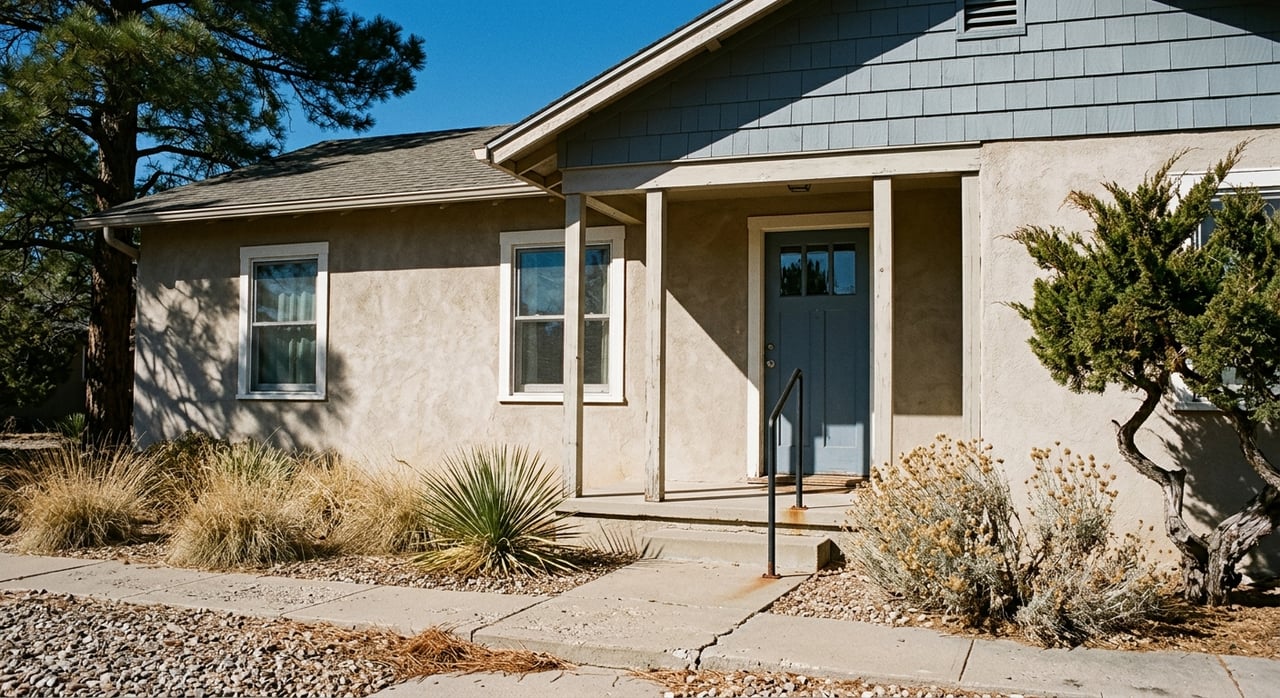
If you are looking at Old Colorado City short-term rentals, the opportunity is real, but so is the fine print. This part of Colorado Springs draws steady visitor traffic thanks to its historic commercial district, nearby attractions, and year-round events, yet not every property can legally or practically function as a strong STR. If you want to invest with fewer surprises, you need to understand demand, zoning, permitting, parking, and neighborhood-specific costs before you buy. Let’s dive in.
Why Old Colorado City Gets Attention
Old Colorado City is not a separate town. It is a historic neighborhood within Colorado Springs, and city planning materials identify it as a Historic Neighborhood with a commercial district listed on the National Register of Historic Places, according to the Midland Corridor study.
For visitors, that historic setting is part of the appeal. Visit Colorado Springs describes Old Colorado City as a shopping, dining, and entertainment district with historic buildings, arts and culture, museums, retail shops, tours, and access to open space.
That matters if you are evaluating STR demand. You are not just buying a house. You are buying into a location that already has a built-in visitor economy and a recognizable identity.
Visitor Demand Supports the Story
The regional tourism picture is strong. In 2024, the Pikes Peak Region welcomed 25.5 million visitors who spent $3.1 billion, with an average stay of 2.7 nights, according to Visit Colorado Springs.
That average stay length fits the typical short-term rental model well. It suggests a market shaped by weekend trips, short getaways, and event-driven travel rather than only long vacation bookings.
Seasonality also matters. Visit Colorado Springs reports that spring and summer account for the largest share of visitation, while repeat visitors, friends-and-family trips, touring, and outdoor travel all remain important segments.
Attractions Near Old Colorado City
Old Colorado City benefits from being near several major destination drivers. The biggest is Garden of the Gods, which the city calls the most-visited attraction in the region and says saw an estimated 5.2 million visitors in 2024.
The neighborhood also has its own event energy. Territory Days brings a major Memorial Day Weekend street festival to Old Colorado City, and the area also connects into the Avenue Creative Circuit and First Friday art walks.
For a guest, that creates multiple reasons to stay nearby. For you as an investor, it helps explain why this neighborhood keeps showing up on the radar for STR buyers.
What the Housing Stock Means for Investors
Old Colorado City does not read like a master-planned resort area. PlanCOS places it among the city’s Historic Neighborhood examples, and city historic survey materials note that middle-class and working-class homes are found throughout the area.
The Midland Corridor report says the neighborhood is largely residential, with commercial and industrial uses concentrated along Colorado Avenue. In practical terms, that often points investors toward smaller-scale houses and corridor-adjacent parcels rather than large resort-style inventory.
That older, established housing stock can be appealing for STR guests who want character and walkable access to shops, restaurants, and attractions. It can also mean more diligence around parking, layout, and legal use.
STR Rules Matter More Than Traffic Counts
This is the key point: visitor demand alone does not make a property a viable short-term rental. In Old Colorado City, your deal lives or dies based on the parcel’s zoning, your occupancy status, and whether the property can meet the city’s permitting and operating rules.
Colorado Springs amended its short-term rental ordinance in 2019 to create separate rules for owner-occupied and non-owner-occupied STRs, according to the city’s short-term rental guidance.
If you skip this step and buy based only on location, you can end up owning a property that looks perfect on paper but cannot be used the way you intended.
Owner-Occupied vs Non-Owner-Occupied
The city defines an owner-occupied STR as one where the owner is physically occupying the home for at least 185 days per year. These may operate in lawful dwelling units where residential units are permitted.
Non-owner-occupied STRs face tighter constraints. In Colorado Springs, non-owner-occupied STR permit applications submitted after December 26, 2019 are not permitted in single-family zoning districts.
That rule is a major screen for Old Colorado City investors. If you are planning an absentee-operated STR on a single-family parcel, you need to verify zoning early, because the city may not allow that use at all.
The 500-Foot Spacing Rule
In zoning districts where non-owner-occupied STRs are allowed, there is another hurdle. The city requires those units to be at least 500 feet from another non-owner-occupied STR.
There is no overall citywide cap on STR approvals, but spacing still matters. A property can look compliant in every other way and still fail because another permitted non-owner-occupied STR sits too close.
This is one reason parcel-level due diligence matters so much in Old Colorado City. You need to evaluate the exact property, not just the neighborhood.
Permit Requirements to Budget For
Colorado Springs has a meaningful compliance stack for STR operators. Based on current city requirements, applicants may need:
- Proof of primary residence for owner-occupied permits
- At least $500,000 in liability insurance
- Proof of a live listing on a hosting platform
- A $124.95 annual permit fee
- A valid certificate of occupancy
The permit is issued to a specific owner. It does not transfer with the property, and it must be renewed annually.
That last point is important for acquisitions. If you buy a home that was previously used as an STR, you are not buying the seller’s permit along with it.
Operational Rules You Cannot Ignore
Operating the property is about more than getting approved. The city also requires weekly residential trash collection, compliance with planning, zoning, building, fire, and safety codes, driveway-first parking with street overflow only where permitted, and a 24-hour local point of contact who can respond within one hour.
The city also prohibits weddings and other large social or commercial events at STRs. If you book directly rather than through a marketplace facilitator, you also need a city sales tax license.
These rules shape the kind of property that works best. In this neighborhood, easy parking, straightforward access, and a manageable floor plan are not luxuries. They are risk-reduction features.
Parking Is a Real Constraint
Parking is one of the biggest practical issues in Old Colorado City. The city launched a parking and curbside survey for Downtown and Old Colorado City because curb space is in high demand.
That pressure gets worse during major events. Territory Days guidance says street parking is extremely limited during the festival.
For an STR, this affects guest experience and operations. A home with reliable off-street parking will usually be easier to manage than one that depends on guests finding curb space during busy weekends.
PikeRide Can Help Guest Mobility
One local advantage is PikeRide service in Old Colorado City. For some travelers, that can make the stay more car-light and reduce dependence on parking.
That does not remove the need to think carefully about parking. It does, however, give you another angle when evaluating guest convenience and marketability.
If a property has modest parking but strong access to neighborhood activity and bike-share options, that may improve the guest experience enough to matter.
District Assessments Can Affect Returns
If a property falls within the Old Colorado City Security and Maintenance District, you should underwrite that cost. The city lists a 2024 assessment of 13.416 mills, with district responsibilities including streetscape, landscaping, parking lots, benches, signage, and snow removal.
That is not a universal cost for every property in the neighborhood, but it can be material for some parcels. Investors who miss district assessments can end up understating carrying costs.
This is a good reminder that Old Colorado City underwriting should be address-specific, not just neighborhood-wide.
ADUs Are Not a Shortcut
If you are thinking about a hybrid strategy, pay close attention to the city’s ADU rules. Colorado Springs says an ADU, or any portion of a structure used as an ADU, may not also be used as an STR.
The city’s 2025 ADU update removed owner-occupancy requirements for ADUs, which may help long-term housing flexibility. It did not change the STR prohibition.
So if your plan is to buy a property with an ADU and run that unit as a short-term rental, current city guidance says no.
Strongest and Weakest STR Candidates
Based on the city’s rules and the neighborhood’s characteristics, the strongest candidates are likely:
- Owner-occupied or otherwise compliant lawful dwellings
- Properties with off-street parking
- Homes with a valid certificate of occupancy
- Parcels in zoning designations that clearly allow the intended STR use
The weakest candidates are likely:
- Single-family parcels meant for absentee non-owner-occupied STR use
- Condo or common-ownership properties with extra limits
- Properties without certificate of occupancy status
- ADUs intended for STR use
That is the practical filter. In Old Colorado City, compliance and operations often matter more than raw tourism appeal.
How to Underwrite Demand Realistically
A smart STR pro forma here should reflect the public demand indicators we actually know. The region’s 2.7-night average stay, spring and summer strength, repeat-visitor mix, and the importance of leisure, family, touring, and outdoor travel all point to healthy short-stay demand.
It is also reasonable to expect stronger performance around weekends, holiday periods, festivals, and shoulder-season travel tied to attractions and events. That is an inference from regional visitor patterns and the neighborhood event calendar, not a city-issued revenue forecast.
In other words, Old Colorado City likely offers demand. The bigger question is whether the specific property can legally capture it and operate smoothly enough to protect your margins.
A Practical Buying Checklist
Before you move forward on an Old Colorado City STR opportunity, verify these items:
- Exact zoning and whether your intended STR use is allowed
- Whether the plan is owner-occupied or non-owner-occupied
- Distance from other non-owner-occupied STRs if spacing rules apply
- Certificate of occupancy status
- Off-street parking setup and guest parking limitations
- Insurance requirements and annual permit costs
- Trash, cleaning, and turnover logistics
- Whether the property sits inside the Security and Maintenance District
- Whether any part of the property is an ADU
This checklist will not replace full due diligence, but it can help you avoid the most common and expensive mistakes.
The Bottom Line on Old Colorado City STRs
Old Colorado City has real ingredients that attract STR investors: historic character, established visitor traffic, major nearby attractions, and a location that feels distinct within Colorado Springs. But this is not a market where you can buy first and sort out legality later.
The best opportunities are usually the ones where zoning, occupancy status, parking, certificate of occupancy, and operating logistics already line up. If you want a candid read on whether a specific property looks workable as an investment, Benjamin Kennedy can help you evaluate the deal with local market context and investor-focused perspective.
FAQs
Can I rent out only part of my home as a short-term rental in Old Colorado City?
- Yes. According to the city’s STR guidance, you can rent part of your home, but the permit requirement and occupancy rules still apply.
Can I buy a vacant property in Old Colorado City and hold it for a future STR permit?
- No. The city says the property must have a valid certificate of occupancy for STR permitting.
Can a short-term rental permit transfer when I buy an Old Colorado City property?
- No. Colorado Springs says the STR permit is issued to a specific owner and does not run with the property.
Are non-owner-occupied short-term rentals allowed on single-family parcels in Old Colorado City?
- In Colorado Springs, non-owner-occupied STR permit applications submitted after December 26, 2019 are not permitted in single-family zoning districts.
Can I use an ADU as a short-term rental in Old Colorado City?
- No. The city says an ADU, or any portion of a structure used as an ADU, may not also be used as an STR.